Comparing the climate footprint of different breakfast options
Which breakfast option in our comparison produces fewer greenhouse gas emissions? But: numbers alone don’t tell the full story – it’s worth looking at the bigger picture to make the ideal choice in the long run.
Each of us can influence our own climate footprint through the way we live and eat. And yes – your breakfast can make a difference.
Comparing breakfast options
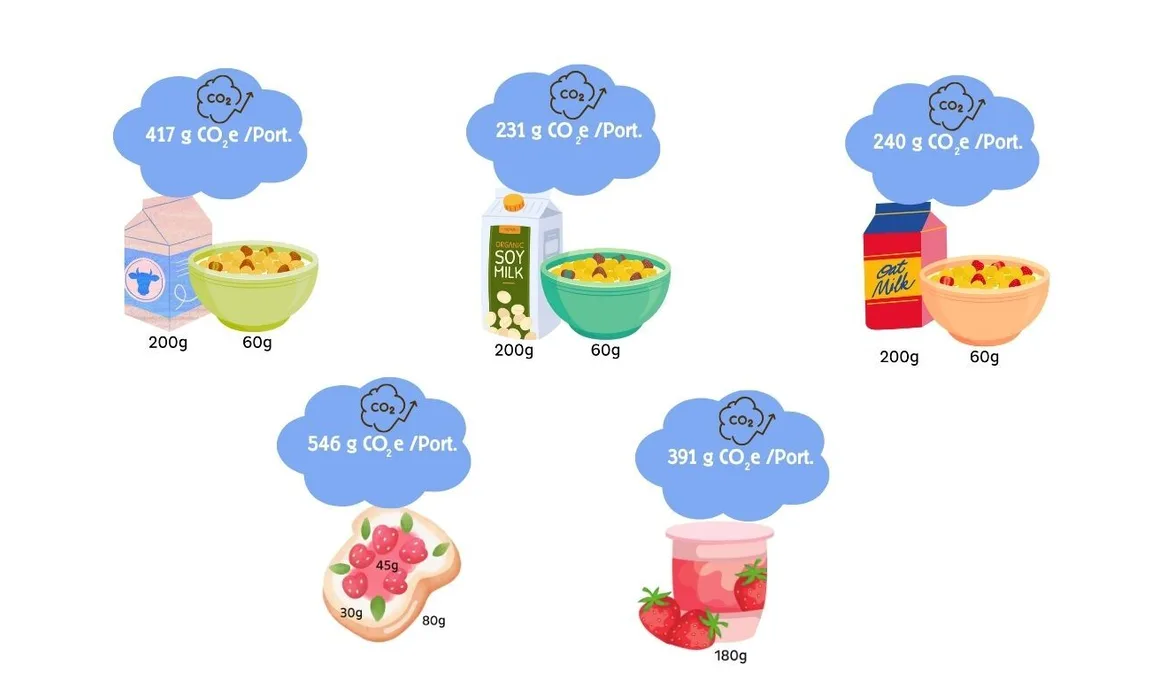
Below, you’ll find a breakdown of the climate footprint per portion for various breakfast choices.
How did we make the comparison?
To compare the climate footprint of an average familia Müesli with other breakfast options, our external climate expert applied the “cradle to consumer” approach. This means the full linear journey of a product is considered – from the farm to your table.
What’s measured are the greenhouse gas emissions, including LUC (Land Use Change). LUC refers to emissions caused by changing how land is used – for example, when forest is cleared to grow coconut palms. As a source for the environmental impacts of the foods, we used the Agribalyse 3.1 environmental database.
What’s the calculation based on?
a) Standard portion: 60 g of Müesli with 2 dl of milk (e.g. familia Müesli; based on the average of all familia varieties)
b) Breakfast bread with butter and jam: two slices of mixed wheat-rye bread (40 g each), 5 g of butter and 22.5 g of strawberry jam per slice
c) Fruit yoghurt: 180 g (small pot)
How is the climate footprint calculated?
A sustainable & healthy nutrition
Striking the balance between a healthy and sustainable diet isn’t always easy – and sometimes, it feels like a compromise.
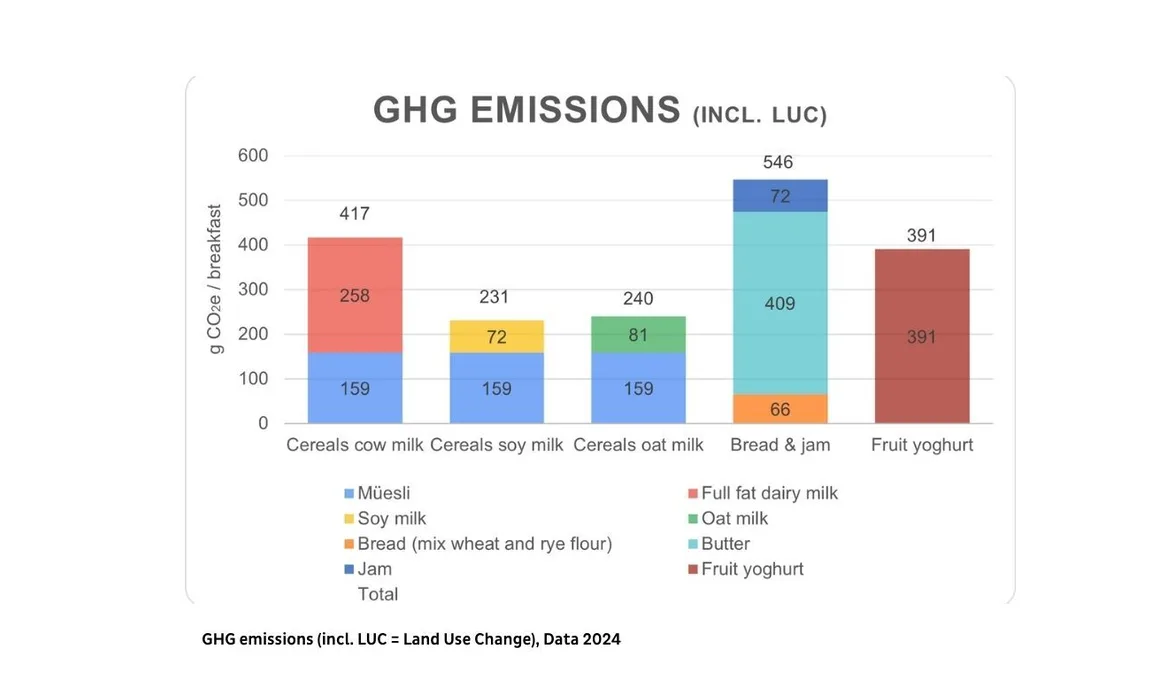
Let’s take another look at the climate footprint of different breakfast options (see charts above). Based on these figures, you might conclude that Müesli with a plant-based milk alternative is the best choice.
But that’s only part of the story. Environmental impact is still mostly calculated by weight, which often makes animal-based products look worse than they really are. If we measured impact based on nutritional value, the picture would shift – and animal products might actually come out better, or at least not worse. That’s because animal-based foods tend to have a higher nutrient density than plant-based ones. In other words: you need to eat less to get the same nutritional value.
That’s why it’s essential to consider the nutritional perspective when assessing environmental impact – after all, we eat to nourish ourselves. And when you do that, the widely claimed negative impact of animal products looks more nuanced. Especially if you choose organic milk or butter instead of mass-produced alternatives.
Worried that organic is too expensive? Maybe it’s just a matter of priorities: skip two or three new clothing items a year – and treat yourself to something truly good each morning. Like a Müesli made with organic whole milk from your region.