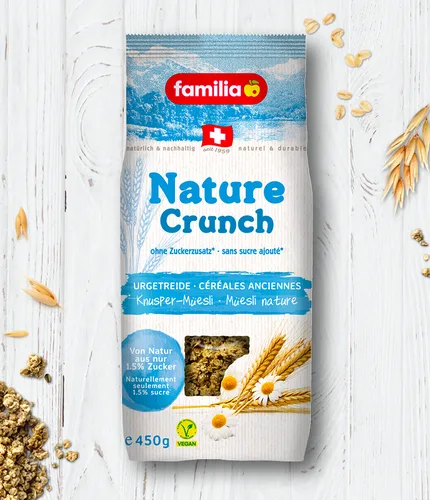
familia Nature Crunch 450 g

Our Müesli consist largely of wholegrain oats. And there’s a good reason for that: even Swiss medical doctor and nutrition reformer Dr Bircher-Benner emphasised at the time that eating oats regularly is beneficial to health in many ways. Today, modern studies confirm that oats provide long-lasting energy, are saturating, and contain nutrients that can protect the heart, support metabolism and promote digestion. This report summarises the latest scientific findings on the superfood oats.
Oats stand out from other cereals. They contain more high-quality protein and unsaturated fatty acids. Oats also contain vitamins and minerals such as iron, zinc, magnesium and B vitamins. Particularly noteworthy is the high dietary fibre content, including beta-glucan and the unique avenanthramides, which are secondary plant substances with antioxidant and anti-inflammatory properties that are only found in oats.
Compared to wheat or rice, oats are also consumed more often as genuine whole grains, which further increases the antioxidant and dietary fibre content. These ingredients form the basis for the broad health-promoting effects, which are explained below.
Proteins consist of amino acids – the building blocks of our body. Nine of these amino acids are essential, which means they must be obtained through food. Oats have a balanced amino acid profile, but little lysine. Dairy products, on the other hand, are rich in lysine – if you combine oats with cow’s milk, yoghurt or quark, their biological value increases significantly. You can also find out more about this in this familia health tip:
How to meet your daily protein needs with High Protein low sugar
A large proportion of oat protein consists of globulins, which contain a particularly high amount of readily available proteins compared to other cereals and thus contribute to the nutritional quality of oats. This means that eating Müesli regularly can also make a valuable contribution to protein supply in plant-based diets.
The term ‘dietary fibre’ refers to parts of plants that cannot be digested by humans but therefore have a very important influence on our digestive system, because they slow down digestion and ensure a long feeling of satiety. Soluble beta-glucan is particularly valuable for this purpose: it forms a gel in the intestine that delays the absorption of sugar and fat. As such, it can have a beneficial effect on cholesterol and blood sugar levels as well as on appetite. Just 3g of beta-glucan per day – contained in approx. 60g of oats – helps to maintain a normal cholesterol level in the blood.
Beta-glucan also serves as a prebiotic: intestinal bacteria convert it into short-chain fatty acids, which have an anti-inflammatory effect and can strengthen the intestinal barrier. Regular oat consumption can therefore support the heart, digestion and immune system at the same time.If you want to know more about intestinal health and the difference between prebiotics and probiotics, we recommend reading this tip below:
Gut feel good, all good? - How our gut influences us
A large British study showed that out of 13 dietary habits studied, only one was clearly associated with health benefits: regular consumption of Müesli. The study participants who consumed Müesli had an approximately 25 % lower risk of coronary heart disease.However, one editorial emphasises that it is not about a single ‘miracle ingredient’, but about the interaction between many plant-based foods – and that too much sugar significantly reduces these benefits.
The benefits of oats described above can therefore be weakened by too much added sugar in the Müesli. Sugar-rich crunchy Müesli causes blood sugar levels to rise quickly and thus partly neutralise the positive effects of oat fibres.
That’s why it’s a good idea to opt for Müesli or granola that emphasises the natural character of the oats. If you’re in the mood for crunchy combinations with little or no added sugar, there’s a wide selection of ‘lower sugar’ familia Müeslis available today:


